
NEXT IWMS · INDEPENDENT REAL ESTATE TECHNOLOGY ADVISORY
Independent IWMS and real estate portfolio systems consulting.
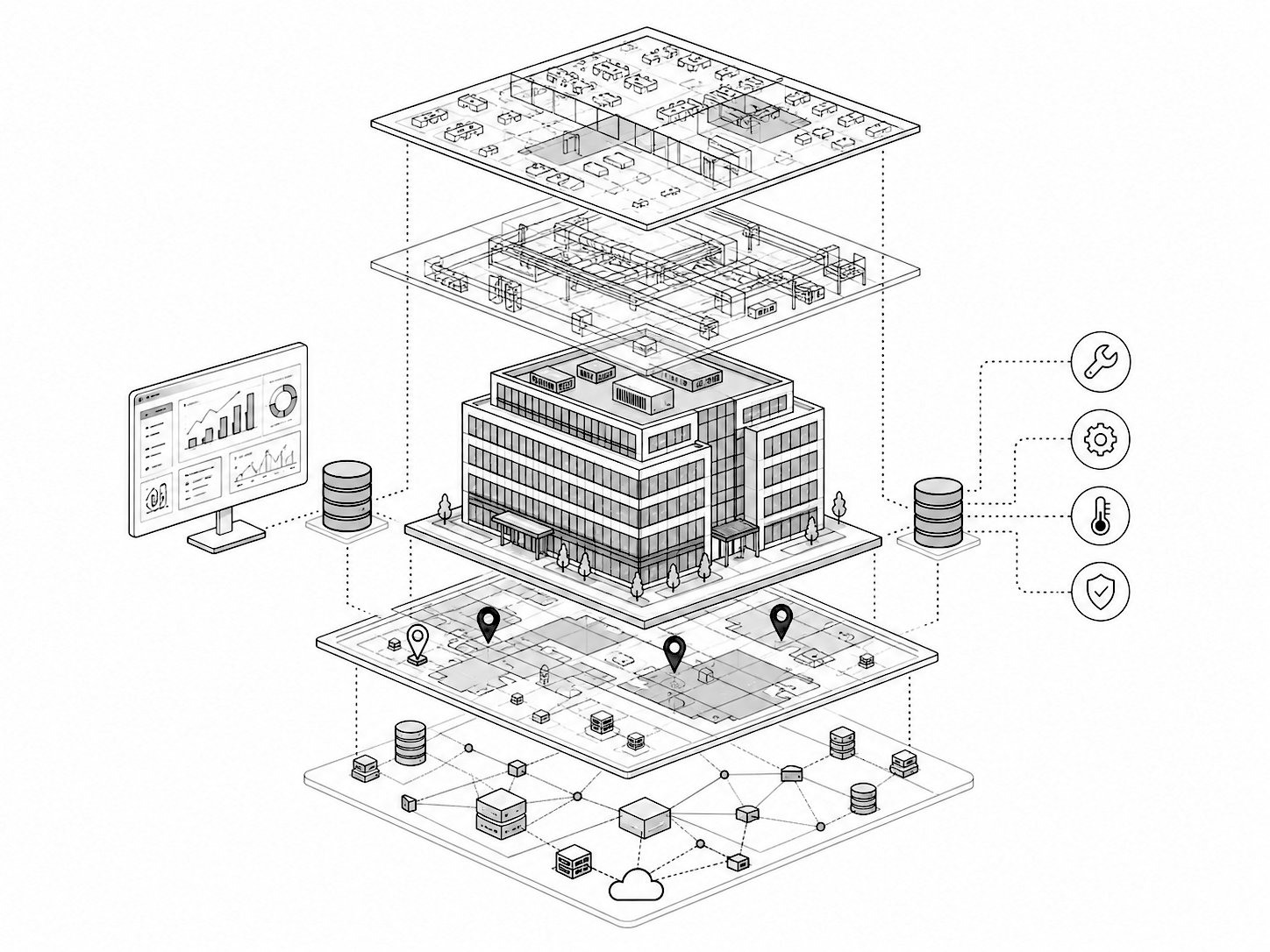
NEXT provides independent IWMS consulting and portfolio systems advisory for corporate real estate, facilities and asset management teams that need to assess, simplify, select or improve the systems supporting their portfolios.
With more than 15 years of experience specifically focused on IWMS—and more than 20 years in real estate operations—we connect technology decisions with business processes, data, governance and the people who rely on them.
Our advice is independent and vendor-neutral. The objective is not to sell a platform. It is to help you make the right investment, reduce delivery risk and build a technology environment that supports better real estate decisions.
WHY NEXT IWMS
Technology should support operations—not define them.
A real estate system creates value only when people trust its data, its processes reflect the way the organization operates and its information helps management make decisions.
When technology becomes fragmented, underused or overly customized, the consequences extend far beyond IT: duplicated work, inconsistent reporting, frustrated users, expensive integrations and decisions made without reliable evidence.
NEXT provides independent advice across IWMS, real estate portfolio management, lease administration, workplace, facilities, maintenance, reporting and related data platforms.
By considering systems, data, processes, governance and users together, we can determine whether the real problem lies in the technology—or in the way it has been selected, configured, governed or used.
CREDIBILITY STRIP
- 15+ years working specifically with IWMS
- Independent and vendor-neutral
- 20+ years grounded in real estate operations
- Systems, data, processes and people considered together.
IWMS SERVICES NAVIGATION
Choose the right starting point.
You may not need a new system. You may need a clearer understanding of the one you already have, a plan for simplifying your technology landscape, an objective selection process or independent support during delivery.
Is our current environment fit for purpose?
Identify what works, what does not and what should be addressed first.
Go to IWMS Health Check >
What should we keep, simplify or change?
Create an actionable roadmap for systems, data and capabilities.
Go to Technology Roadmap >
Which solution best fits our operating model?
Run a structured and defensible vendor-neutral selection.
Go to Solution Selection >
How do we protect our interests during delivery?
Maintain independent oversight from design through adoption and improvement.
Go to Independent Advisory >
THE NEXT APPROACH
Why does independence matter?
See how independent, client-side advice protects your interests, works with your existing teams and keeps technology decisions aligned with operational outcomes.
Explore the NEXT approach & FAQs >
IWMS & Portfolio Systems Health Check
Is our current environment fit for purpose?
A focused health check identifies what is preventing your systems from delivering value—and what should be addressed first.
An IWMS may be technically operational while still failing its users and management. Reports may not be trusted. Important processes may depend on spreadsheets and manual workarounds. Enhancement requests may accumulate without clear priorities. Users may blame the platform for problems rooted in data, governance or process design.
An independent health check provides an evidence-based view of how well your current environment supports the organization—and what should happen next.
What you gain
- A clear picture of what is working and what is not
- Separation of platform issues from data, process and governance issues
- Prioritized quick wins, remediation actions and strategic decisions
- A stronger evidence base for budgets and investment requests
- A practical action plan designed to restore confidence and value
What we examine
- Alignment between system capabilities and operational requirements
- User experience, adoption and confidence
- Business processes, workflows and manual workarounds
- Data quality, ownership, reporting and management indicators
- Configuration, integrations and unnecessary customization
- Governance, support arrangements and enhancement processes
- Risks, capability gaps and opportunities for simplification
Relevant project experience
Selected experience from previous roles (*) — US healthcare organizations :
- Led independent reviews of established IWMS environments through stakeholder interviews, process analysis, data and reporting assessment, and review of existing configurations.
- Converted operational pain points, user issues and enhancement requests into structured and prioritized remediation backlogs.
- Helped organizations distinguish immediate improvements from changes requiring broader governance, integration or platform decisions.
*Selected experience from previous roles - not presented as NEXT client work
IWMS & Real Estate Technology Roadmap
What should we keep, simplify or change?
A structured technology roadmap clarifies what to retain, improve, integrate, consolidate or replace—and sequences those decisions into a practical plan.
Real estate technology environments rarely become complex by design. New platforms, local solutions, spreadsheets, integrations and reporting tools accumulate over time. Each may address an immediate need, while the overall landscape becomes harder and more expensive to operate.
A technology roadmap turns that accumulated complexity into a deliberate sequence of decisions. It connects business priorities with current capabilities, target systems, dependencies, resources and investment requirements.
The scope can extend beyond IWMS to portfolio management, lease administration, facilities and maintenance platforms, workplace applications, reporting tools, GIS, BIM and the integrations connecting them.
What you gain
-
A shared view of the existing technology landscape
-
Clear recommendations on what to keep, improve, connect or retire
-
Target capabilities and guiding architecture principles
-
A sequenced three-to-five-year transformation roadmap
-
Defined dependencies, decision gates and investment priorities
-
A basis for aligning real estate, facilities, finance and IT stakeholders
What we examine
- Current applications, capabilities, integrations and dependencies
- Business value, cost and operational importance of each component
- Duplicate, unsupported or underperforming solutions
- Capability, data, reporting and governance gaps
- Future operational needs and management priorities
- Opportunities to simplify and rationalize the technology landscape
- Organizational readiness, sequencing constraints and implementation risks
Relevant project experience
Selected experience from previous roles (*) — Canadian (Quebec) financial institution :
- Mapped fragmented real estate technology landscapes spanning core platforms, point solutions, integrations, reporting tools and manual processes.
- Developed multi-year convergence and rationalization roadmaps connecting operational priorities with capabilities, dependencies and investment decisions.
- Facilitated business and IT discussions to establish a common target state, realistic sequencing and clear ownership of future decisions.
Independent IWMS & Portfolio Systems Selection
Which solution best fits our operating model?
An independent selection process turns real operating needs into a structured, defensible and vendor-neutral decision—not a response to the most persuasive demonstration.
The best-known or most feature-rich platform is not automatically the right platform for your organization. The right choice depends on operating processes, portfolio characteristics, data, integration requirements, internal capacity, governance and the outcomes the investment is expected to produce.
NEXT provides independent support throughout the selection process. Because we do not represent a software vendor, requirements and evaluations remain centered on your organization rather than on a predetermined platform.
What you gain
- Requirements grounded in real operations rather than a generic feature list
- A consistent and auditable comparison of vendors
- Greater protection against bias, overbuying and avoidable customization
- Visibility into implementation risk before a contract is signed
- A defensible recommendation that stakeholders can understand and support
- A stronger foundation for negotiation and successful implementation
What we examine
- Decision and scope
Clarify the business problem, expected outcomes, stakeholders, scope and measures of success. - Current-state assessment
Review existing systems, processes, data, integrations, strengths and gaps. - Requirements and priorities
Translate real operating scenarios into prioritized functional, technical, data and service requirements. - Market screening and procurement strategy
Identify credible solution options and determine the appropriate RFI, RFP or structured evaluation process. - Scripted demonstrations and evaluation
Ask shortlisted vendors to demonstrate how their solutions address your actual scenarios rather than deliver standard sales presentations. - Risk, cost and fit assessment
Compare functionality, architecture, integration, implementation approach, scalability, vendor capacity and total cost. - Recommendation and implementation readiness
Produce a transparent recommendation and prepare the governance, data, resources and decisions needed for delivery.
Relevant project experience
Selected experience from previous roles (*) — global technology company supporting 160'000 employees :
- Led vendor-neutral selection processes from current-state assessment and requirements gathering through market screening, RFI/RFP, demonstrations, scoring and recommendation.
- Designed scenario-based demonstration scripts and evaluation models reflecting actual real estate and facilities processes.
- Supported decision-makers in comparing functional fit, data, integrations, delivery risk, scalability, vendor capability and total cost.
Independent Advisory, Delivery Assurance & Optimization
How do we protect our interests during delivery?
Independent client-side oversight keeps technology decisions aligned with your operational interests—from design and configuration through adoption and continuous improvement.
Selecting a system is only one part of the journey. Important decisions continue throughout design, configuration, data migration, integration, testing, deployment and adoption.
Without strong client-side oversight, implementation choices can gradually become driven by platform conventions, technical convenience or delivery constraints rather than by the outcomes that justified the investment.
NEXT can act as an independent advisor on the client side—providing senior guidance, structured challenge and continuity across the project.
What you gain
- Earlier identification of delivery and operational risks
- Clearer decisions and responsibilities
- Better control of scope, priorities and unnecessary customization
- Stronger accountability across vendors and internal teams
- Continuity between the original business need and the delivered solution
- Internal knowledge and decision authority retained by your organization
- A platform that continues to evolve with operational requirements
What we examine
- Business case, scope and governance
- Operating-process and requirements definition
- Independent review of solution and configuration decisions
- Vendor, integrator and project-team coordination
- Data migration and integration readiness
- Testing strategy and business acceptance criteria
- Risk, issue and decision management
- User adoption and organizational readiness
- Benefits realization and post-implementation review
- Enhancement prioritization and continuous improvement
- Remediation of stalled or underperforming initiatives
Relevant project experience
Selected experience from previous roles (*) — European financial institution operating in 50+ countries :
- Provided client-side steering and independent challenge during IWMS implementation, optimization and remediation initiatives.
- Translated operational requirements into solution decisions, acceptance criteria, testing priorities and governance arrangements.
- Supported organizations in structuring enhancement portfolios, resolving recurring issues and establishing sustainable continuous-improvement practices.
WHY INDEPENDENCE MATTERS
Independent by design. Accountable to your outcomes.
Software vendors and integrators bring essential product and delivery expertise. They also approach the project from the perspective of a particular platform or implementation model.
NEXT sits on your side of the table.
We do not begin with the assumption that you need to purchase or replace a system. The right recommendation may be to improve what you already own, simplify the application landscape, strengthen data and governance, integrate selected capabilities, replace a platform—or delay procurement until the organization is ready.
Independence allows difficult but valuable questions to be asked:
-
Are we solving the right problem?
-
Does this requirement create business value?
-
Are we selecting for actual operational fit?
-
Is customization necessary?
-
Are the data and organization ready?
-
What would happen if we did nothing?
-
Which decision most reduces risk or uncertainty?
You receive senior advice grounded in more than 15 years of direct IWMS experience and more than 20 years of real estate operations—not a sales process disguised as consulting.
Frequently asked questions
1. How NEXT works with your team
How can an independent consultant support a complex IWMS initiative?
NEXT provides the senior advisory and coordination layer needed to keep the initiative aligned with the client’s objectives. Nicolas leads the analysis, structures the decisions and mobilizes the appropriate business, technology and delivery resources. Existing client teams and providers are used wherever they remain suitable; additional specialists can be introduced when a capability gap, platform replacement or new implementation requires them. This keeps the team proportionate to the project while maintaining clear accountability.
Who leads a NEXT IWMS engagement?
Nicolas Delforge personally leads the initial/core consulting, analysis and client-side advisory work. He remains directly involved in understanding the operating context, assessing the current environment, structuring decisions and developing recommendations. The broader delivery team is then shaped around the needs of the engagement rather than assigned from a predefined consulting bench.
Can NEXT work with our existing internal teams, software vendors and systems integrators?
Yes. Independence does not mean working in isolation. NEXT can work alongside your real estate, facilities, IT, procurement, finance and change-management teams, as well as your existing software vendors and implementation partners. The role is to connect their expertise, clarify responsibilities, challenge assumptions when necessary and keep decisions aligned with your operational interests.
Does NEXT configure or implement IWMS software?
NEXT is not a software reseller or a conventional systems integrator. Our primary role is to provide strategy, analysis, requirements definition, selection support, client-side governance, delivery assurance and optimization advice. Configuration, development, integration and other specialized implementation activities are performed by the most appropriate client, vendor or integration resources. NEXT can help define, coordinate and independently review that work.
How does NEXT maintain its independence while coordinating other providers?
NEXT begins with the client’s operating needs and decision criteria, not with a preferred platform or implementation partner. Existing and prospective providers are assessed against the same requirements, risks and expected outcomes. Recommendations remain focused on what best serves the organization, whether that means improving the current environment, changing the delivery model, introducing specialized capabilities or replacing a platform.
2. Choosing the right scope and approach
Can NEXT support only one stage of the initiative?
Yes. Support can be focused on a specific decision, diagnostic, roadmap, selection process, implementation review or remediation challenge. The engagement does not need to include the entire technology lifecycle.
When should an organization commission an IWMS health check?
Common triggers include declining user confidence, unreliable reporting, excessive manual work, accumulated enhancement requests, recurring data problems, weak adoption or uncertainty about whether to optimize or replace the platform.
Do we necessarily need a full IWMS?
No. The right environment may combine an IWMS with specialized portfolio, lease, maintenance, workplace, data or reporting platforms. The objective is coherent support for the operating model—not conformity to a product category.
Can NEXT review systems other than IWMS platforms?
Yes. Engagements can cover broader real estate portfolio management systems, facilities and maintenance applications, lease administration, workplace technology, reporting, GIS, BIM and related integrations.
What happens if the current system or delivery provider needs to be replaced?
If replacement is the appropriate course of action, NEXT can help define the future operating requirements, structure the selection process, evaluate potential solutions or providers and prepare the organization for transition. New delivery resources can be identified and mobilized as required, with roles and responsibilities agreed transparently with the client. A replacement is recommended only when the evidence supports it—not as a predetermined outcome.
3. Where and how we work
Where does NEXT provide IWMS consulting services?
NEXT can support organizations and real estate portfolios across the Americas and Europe. Engagements may involve a single location, a national portfolio or a multi-country operating environment. The delivery approach is adapted to the geography, stakeholder structure and complexity of each organization.
Are NEXT IWMS services available in English and French?
Yes. Consulting, interviews, workshops, analysis and project communications can be delivered in English or French. Bilingual engagements can also be structured for organizations whose stakeholders, operations or project teams work in both languages.
Can an engagement be delivered remotely or on site?
Yes. Engagements can be structured as remote, on-site or hybrid assignments, depending on the work required. Stakeholder interviews and analytical activities can often be completed remotely, while selected workshops, operational reviews or major decision points may benefit from an on-site presence. The delivery model is agreed with the client at the outset.